Cold Water, Hot Bites: Why Winter Is the Hudson River's Best-Kept Fishing Secret
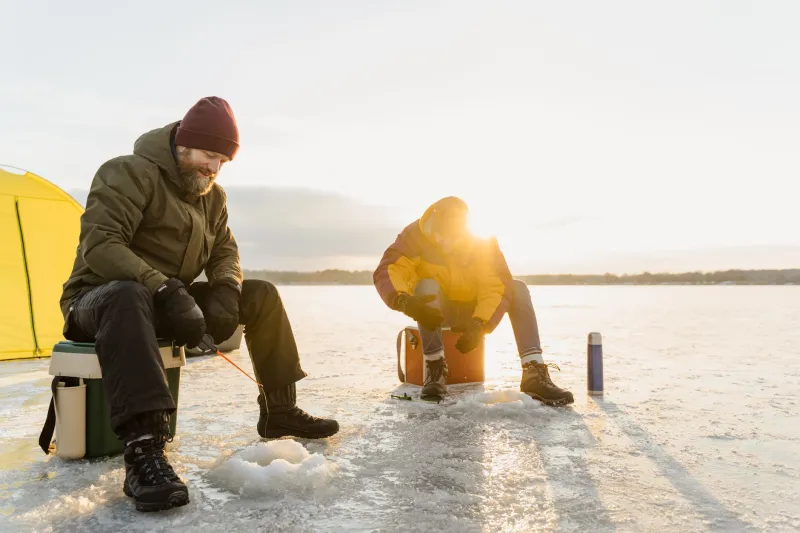
There's a certain kind of quiet that settles over the Hudson River in winter. The recreational boaters are gone. The summer crowds have long since retreated. And if you're standing on a frost-covered dock somewhere between Newburgh and Kingston with a rod in your hand, chances are you've got the whole stretch practically to yourself. That's not a bug — it's the feature.
Winter fishing on the Hudson is one of those well-guarded local secrets that guides and seasoned anglers are only just starting to talk about openly. And honestly? Once you understand what's happening beneath that cold, steel-gray water, you'll wonder why you ever took a break.
What's Actually Biting in January, February, and March
Let's get specific, because the Hudson in winter isn't a one-fish show.
Striped bass are arguably the star of the cold-water season. Unlike their summertime behavior — often scattered and finicky in warm, oxygen-depleted water — stripers in winter tend to stack up in deeper channel areas, making them more predictable and, for the patient angler, very catchable. The lower Hudson, particularly the stretch between the Tappan Zee area and Haverstraw Bay, holds overwintering stripers that can push well past 30 inches.
Yellow perch are another cold-weather favorite, especially as you move into the mid-Hudson Valley. These fish school tightly in winter, and once you find them, the action can be fast and consistent. Ice-adjacent shallows near coves and tributary mouths are prime territory.
Walleye, while less talked about in Hudson River circles, are present in portions of the upper river and can be targeted effectively in winter using jigging techniques near rocky structure. Catskill-area guides have been quietly putting clients on walleye through the coldest months for years.
White perch and chain pickerel round out the winter menu, with pickerel especially active in weedy backwaters where they ambush prey in near-freezing temperatures without breaking a sweat — or whatever the fish equivalent is.
Talking Shop with the Guides Who Live for This
We caught up with a handful of Hudson Valley fishing guides who specialize in cold-weather outings, and the consensus was clear: winter demands adjustment, not avoidance.
"People think fish stop eating when it gets cold," says one Catskill-based guide who runs winter striper trips out of the mid-Hudson region. "They don't. They just slow down. So you slow down too. Slower presentations, lighter line, smaller profiles. Match their metabolism and you'll get bit."
Another guide who operates near the Kingston area emphasized location scouting as the key winter differentiator. "In summer, fish can be anywhere. In winter, they're where the conditions are right — deeper water, stable temperatures, good oxygen. If you find the right spot, you don't need to cover a lot of water."
The guides we spoke to also pointed to one underrated advantage of winter fishing: reduced pressure. "I've had days in February where I'm the only boat on a 10-mile stretch," one guide told us. "The fish haven't seen a lure in months. They're not educated. Sometimes that alone makes all the difference."
Gear Up: What to Bring When the Temps Drop
Winter fishing on the Hudson requires some intentional gear choices. Here's what experienced cold-weather anglers swear by:
Layering is everything. Wool or synthetic base layers, a mid-layer fleece, and a waterproof outer shell rated for wind are non-negotiable. Chest waders with neoprene insulation are worth the investment if you're fishing from shore or wading shallow areas.
Downsize your tackle. Cold water slows fish metabolism, which means they're less likely to chase. Smaller jigs, finesse soft plastics, and lighter line (8–12 lb fluorocarbon for most applications) will outperform heavy summer rigs. For stripers, 3- to 4-inch paddle tail swimbaits in natural colors like white or chartreuse work well in off-color winter water.
Go slow — really slow. Dead-sticking, slow-rolling, and even suspending lures with long pauses between twitches can trigger strikes that a fast retrieve never would. Think of it as a test of patience as much as technique.
Check your rod guides. Ice buildup in rod guides is a real issue on frigid mornings. Keep a small spray bottle of isopropyl alcohol on hand to clear them out, and consider guides with ice-resistant coatings if you're investing in a dedicated cold-weather setup.
Access Points Worth Knowing
Not every waterfront spot is equally accessible in winter, but several public access points along the Hudson remain fishable and well-maintained year-round. The Walkway Over the Hudson in Poughkeepsie connects to shoreline access on both banks. Riverfront Green Park in Peekskill offers open water fishing with good striper potential. The Catskill Point area near the mouth of Catskill Creek has long been a local favorite for winter perch and pickerel.
Always check local regulations before you head out — the Hudson River has specific size and bag limits for several species, and some areas have seasonal restrictions. The New York State DEC website keeps current regulations updated and is worth bookmarking.
Why You Should Go This Winter
Here's the honest pitch: winter fishing on the Hudson isn't for everyone. It's cold. It requires more preparation. And some days, the fish simply aren't cooperating. But the anglers who stick with it — who learn the seasonal rhythms, study the water, and embrace the slower pace — consistently report that winter delivers some of their most memorable days on the river.
The Hudson doesn't shut down in January. It just gets quieter. And sometimes, quiet is exactly what you need.
Grab a thermos, layer up, and get out there. The river's waiting.