Don't Tag That Spot: The Unwritten Rules Keeping Hudson River Fishing Holes Alive
Don't Tag That Spot: The Unwritten Rules Keeping Hudson River Fishing Alive
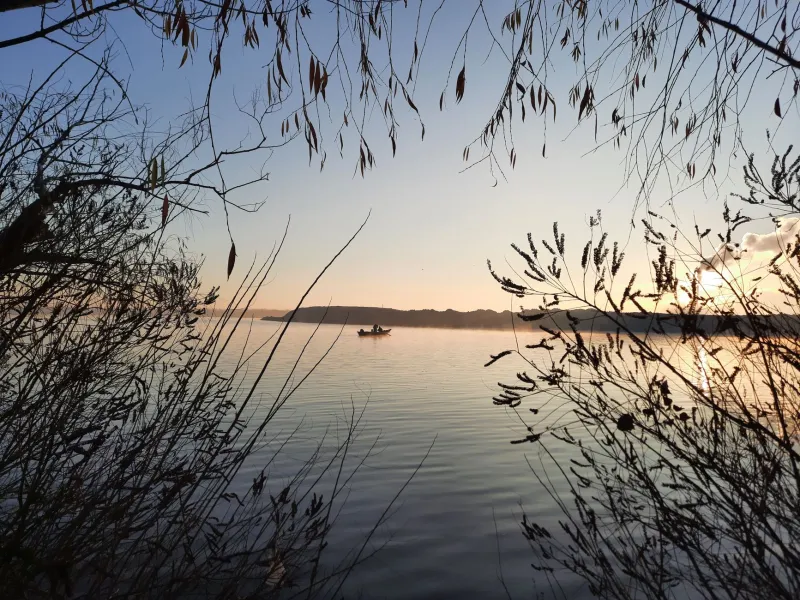
Mike has been fishing the same stretch of the Hudson for going on 23 years. He knows the tides by feel, the stripers by season, and the exact submerged ledge where the big ones stack up in late May. He's never written it down. He's definitely never posted it.
"My father showed me that spot," he says, scanning the water from the stern of his aluminum skiff somewhere north of Newburgh. "His buddy showed him. That's how it works. Or at least, that's how it used to work."
These days, Mike — who asked us not to use his last name, which tells you something right there — spends a fair amount of mental energy worrying about what he calls "the phone problem." Someone catches a good fish, snaps a photo, and geotags the location without thinking twice. Within 48 hours, that quiet eddy or rocky point is crawling with strangers. Within a season, it's fished out.
It's not paranoia. It's pattern recognition. And it's driving a quiet but serious conversation among the Hudson's most dedicated anglers about what it means to share — and what it costs.
The Spot That Disappeared
Ask around long enough and you'll start hearing the same kind of story repeated in different voices. A productive cove near Kingston that got blown up after a YouTube video. A stretch of shoreline below a dam that went from secret to standing-room-only after one viral Instagram post. A backwater channel that used to hold trophy largemouth and now holds mostly empty beer cans.
Sometimes the damage is about pressure — too many lines in too small a space. Other times it's about behavior. Anglers who don't know the unwritten rules of a spot: the areas that need to be rested, the size fish that should always go back, the nesting zones that deserve a wide berth in spring.
"It's not that people are bad," says one fishing guide who works the mid-Hudson regularly. "It's that they're new to the spot. They don't know its history. And a place that took years to figure out can get wrecked in one busy weekend."
The Hudson is a resilient river — its recovery over the past few decades has been genuinely remarkable — but resilience isn't the same as invincibility. Certain fish populations, certain habitats, certain micro-environments along the shore are still fragile enough that sustained pressure can tip them backward fast.
The Code, and Why It's Cracking
For generations, fishing knowledge on the Hudson moved through tight social networks. Mentors and apprentices. Fishing clubs with handshake agreements. Locals who'd earned their spots through years of showing up. Information traveled slowly, which meant spots had time to breathe.
Social media collapsed that timeline to zero.
It's not entirely a villain in this story. Platforms like Instagram and TikTok have introduced thousands of new people to river fishing, built communities across geographic distances, and helped normalize catch-and-release culture in ways that genuinely benefit the fishery. The enthusiasm is real, and it matters.
But enthusiasm without context creates problems. A 22-year-old who just landed his first striper on the Hudson isn't thinking about watershed ecology when he geotags his catch. He's thinking about likes. That's human. It's also, depending on the location, potentially damaging.
"Nobody's the villain here," says one longtime member of a Hudson Valley fishing club that has operated — deliberately — without a public social media presence. "But we've had to get a lot more intentional about what we share and what we don't. That's a new thing for us. It used to just be understood."
How the Old Guard Is Adapting
The response from experienced anglers has been varied and creative. Some have simply gone quiet — scaling back their online presence, posting fish photos without backgrounds that might hint at location, cropping out landmarks with the same care a spy might apply to a classified document.
Others have leaned into misdirection, sharing content from popular, already-crowded spots to draw attention away from the places that matter most. It sounds a little cloak-and-dagger, but it's a rational response to an information environment that rewards disclosure.
Fishing clubs along the Hudson are increasingly formalizing what used to be informal. Some have added language to membership agreements about social media conduct. Others run mentorship programs where new members learn the culture of a spot before they're trusted with its location — a kind of apprenticeship model that mirrors how fishing knowledge used to travel naturally.
There's also a growing movement toward what some anglers call "earned access" — the idea that a spot's location is something you work toward through relationship-building and demonstrated respect for the resource, not something you stumble into via a geotag.
What This Is Really About
Strip away the social media angle and this conversation is fundamentally about stewardship. Who gets to use a resource, how it gets used, and who bears responsibility for keeping it healthy.
The Hudson River's comeback is one of the great environmental success stories in American history. Decades of cleanup work, regulatory battles, and community advocacy have turned a river that was effectively written off in the mid-20th century into a thriving, fishable waterway that supports both ecosystems and economies. That didn't happen by accident, and it won't sustain itself by accident either.
The anglers who care most about this river understand that access and conservation aren't opposites — but they also know that unchecked access without responsibility can undo decades of progress. The spots they protect aren't secret because of selfishness. They're secret because some places need quiet to stay healthy.
"I want people to love this river," Mike says, watching the tide shift on that unnamed stretch of water he's fished since his twenties. "I genuinely do. I just want them to love it the way it deserves to be loved. Which means sometimes you put the phone away and just... be there."
He doesn't tag the location when he leaves. He never has. His father didn't either.
Some things are worth keeping to yourself.