Blueprint for a River: The Engineers Who Quietly Rebuilt the Hudson From the Bottom Up
Everybody loves a comeback story. And the Hudson River has one of the best ones going — a waterway that spent decades as an industrial drain, then somehow clawed its way back into something you'd actually want to fish, paddle, or swim in. We celebrate the activists, the volunteers, the chefs cooking up river-caught striped bass, and the kids wading in for the first time. Rightfully so.
But there's another group that rarely gets a shoutout at the riverside cleanup barbecue. These are the civil engineers, environmental scientists, and infrastructure designers who spent careers doing the unglamorous, highly technical work of figuring out how a river gets fixed — and then actually fixing it. Their tools weren't nets or paddles. They were hydraulic models, sediment cores, load-bearing calculations, and a whole lot of peer-reviewed literature.
The Hudson you enjoy today? A big chunk of it is their blueprint.
When the River Became a Problem to Solve
By the mid-20th century, the Hudson was carrying a staggering load — raw sewage, industrial runoff, PCBs from General Electric's manufacturing plants, and decades of unregulated discharge from paper mills and chemical facilities. The river wasn't just dirty. It was structurally compromised, its natural flow patterns disrupted by dredging, development, and the construction of hard infrastructure that had been built with zero ecological consideration.
The Clean Water Act of 1972 was a turning point, but legislation alone doesn't move sediment or restore a tidal marsh. That required people who understood fluid dynamics, soil chemistry, and the particular stubbornness of a river that had been pushed around for a hundred years.
Engineers began showing up alongside the activists — sometimes reluctantly invited, sometimes crashing the party — and the work of diagnosing the Hudson's physical problems began in earnest.
Locks, Dams, and the Art of Controlled Flow
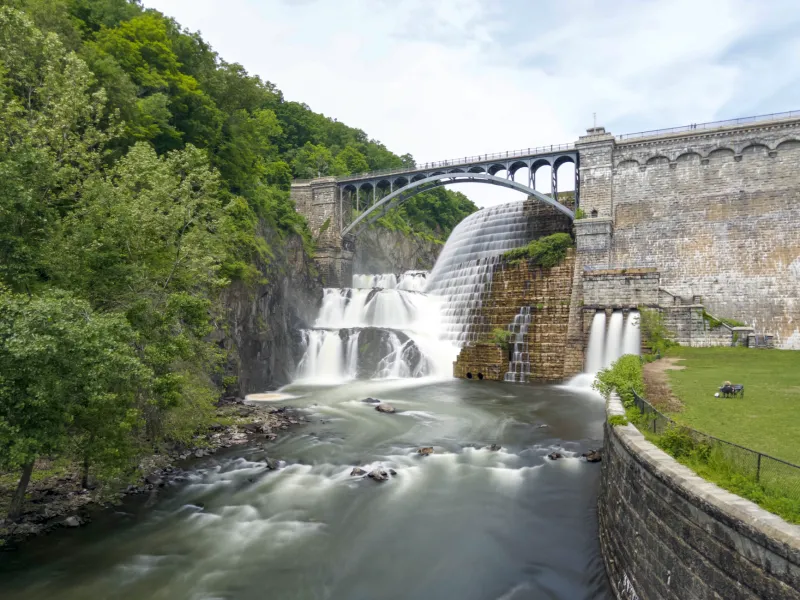
The Federal Lock and Dam system at Troy marks the head of the Hudson's tidal section, and it's one of the most consequential pieces of infrastructure on the entire river. The Federal Dam at Troy essentially creates the boundary between the freshwater upper Hudson and the tidal estuary that stretches 153 miles south to New York Harbor. Managing that boundary — controlling how much water moves through, when, and at what velocity — is a continuous engineering challenge.
What most people don't realize is how much deliberate recalibration has gone into these structures over the decades. Early dam and lock designs prioritized commercial navigation above almost everything else. Restoring ecological function meant going back to those original designs and asking hard questions: What happens to juvenile fish trying to migrate through? How does altered flow velocity affect sediment transport? Where does the oxygen go?
Engineers working with agencies like the Army Corps of Engineers and the New York State Department of Environmental Conservation have spent years modeling these dynamics, adjusting operational protocols, and in some cases retrofitting infrastructure with fish passage technology that simply didn't exist when the original structures were built.
The PCB Problem and the Engineering of Cleanup
No engineering challenge on the Hudson has been more complex — or more contested — than the PCB remediation effort in the Upper Hudson. General Electric discharged an estimated 1.3 million pounds of polychlorinated biphenyls into the river between the 1940s and 1970s. The contamination settled into the riverbed sediment, creating a slow-release pollution problem that would outlast any surface cleanup.
The Environmental Protection Agency's eventual decision to mandate dredging — removing contaminated sediment from roughly 40 miles of river — was as much an engineering project as an environmental one. The logistics were staggering. How do you remove millions of cubic yards of toxic sediment from a working river without spreading contamination further downstream? How do you transport it, contain it, and process it safely?
The answer involved purpose-built processing facilities, specialized dredging equipment designed to minimize sediment resuspension, real-time water quality monitoring stations, and an adaptive management framework that allowed engineers to adjust their approach based on what the data showed as work progressed. It wasn't perfect — no project of that scale ever is — but it represented one of the most technically sophisticated river remediation efforts ever attempted in the United States.
Rebuilding What the River Lost
Beyond cleanup, some of the most exciting engineering work on the Hudson has been about restoration — giving back to the river what development took away.
Tidal wetlands are a perfect example. The Hudson once had hundreds of acres of marsh habitat along its banks, providing nursery grounds for fish, filtering runoff, and buffering shoreline communities against flooding. A century of filling, diking, and hardening the shoreline eliminated most of it. Bringing it back requires more than just removing a bulkhead and hoping for the best.
Restoration engineers have to analyze tidal range, sediment availability, salinity gradients, and the structural integrity of adjacent land before they can even begin. Projects along the Hudson have involved carefully breaching old dikes to reintroduce tidal flow, grading elevations to match the target plant communities, and monitoring for years afterward to make sure the marsh is establishing as intended rather than reverting to mud flat or being overtaken by invasive species like Phragmites australis.
The work at places like Iona Island Marsh in Rockland County and Tivoli Bays in Dutchess County reflects years of this kind of careful, iterative engineering thinking — and the results, in terms of fish habitat and water quality, have been measurable.
The Unsung Calculation Behind Every Good Fishing Spot
Here's the thing that most anglers casting into the Hudson probably never think about: the reason the stripers are stacking up in that particular bend, or the reason the water clarity has improved enough to sight-fish for carp along that shoreline, often traces back to an engineering decision made years or even decades earlier.
A modified dam operation that improved dissolved oxygen levels. A restored wetland that's now filtering agricultural runoff before it hits the main channel. A dredging project that removed a contaminated hot spot and let benthic organisms — the bottom-dwelling invertebrates that form the base of the food chain — recolonize a stretch of riverbed.
None of that happens by accident. It happens because someone ran the numbers, made the case, secured the funding, and did the work.
Respect the River. Respect the Math.
The Hudson's story gets told a lot of different ways. As an environmental justice story. As a conservation triumph. As a recreation destination that keeps getting better every season. All of those framings are true.
But it's also, fundamentally, an engineering story. A story about people who looked at a degraded, complicated, heavily used waterway and believed that the right combination of technical knowledge, careful planning, and stubborn persistence could change its trajectory.
Next time you're out on the water — whether you're dropping a line off a dock in Catskill, paddling through the shallows near Kingston, or just watching the tide move past the Palisades — maybe take a second to think about the blueprints. The models. The calculations that nobody ever frames and hangs on a wall but that made all of it possible.
The river didn't save itself. It had a lot of help from people who really understood how rivers work.
And that's worth knowing.