Your River, Your Backyard: How New Access Parks Are Putting the Hudson Within Reach for Everyone
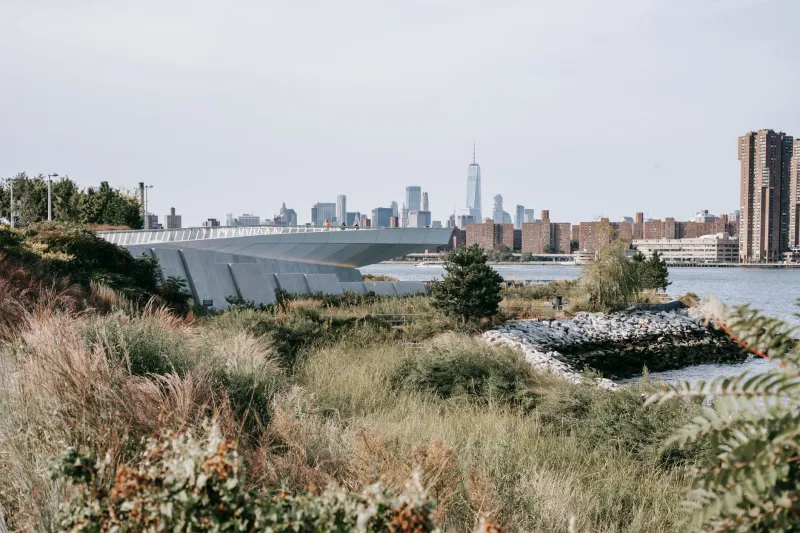
There's a moment that happens to a lot of people the first time they actually get to the water's edge. Not a glimpse of the Hudson from a highway overpass or a distant sparkle between buildings — but actually standing there, feet close to the current, watching a great blue heron work the shallows. It's the kind of moment that changes your relationship with a place.
For a long time, that moment wasn't available to everyone. Chunks of the Hudson's shoreline — particularly in lower-income communities in the Bronx, Yonkers, and parts of northern Manhattan — were cut off by railroads, highways, crumbling industrial infrastructure, or simply neglect. The river was right there, but it might as well have been a thousand miles away.
That's starting to change. And the people making it happen aren't always the ones you'd expect.
Breaking Down the Walls (Literally)
In Yonkers, the transformation is hard to miss. The waterfront that once housed a shuttered industrial corridor has been gradually rebuilt into a string of accessible public spaces — including the Yonkers Waterfront Esplanade — where families now fish off piers, kids run along paths with the river at their side, and kayakers launch on weekends without needing a membership or a trailer. A few years ago, none of that existed in the same form.
Further south, in the Bronx, grassroots organizations like Rocking the Boat have been doing something quietly remarkable for years: giving young people from the South Bronx hands-on access to the river through boatbuilding, environmental education, and on-the-water programming. Their base at Hunts Point — a neighborhood that sits on a peninsula surrounded by water yet has historically had almost no meaningful waterfront access — is a case study in what community-driven change looks like when it actually works.
"The river has always been there," one longtime program participant put it. "We just weren't allowed to get to it."
The Patchwork Problem
Here's the thing about Hudson River access: it's not one unified system. It's a patchwork — state parks, city parks, nonprofit-managed sites, rail-trail connectors, and informal launch spots that locals have known about for years but that rarely show up on official maps. Stitching that patchwork together into something coherent is where a lot of the real work is happening right now.
Organizations like Riverkeeper and the Hudson River Park Trust have been pushing for expanded and improved access for years, but increasingly they're being joined by hyperlocal groups who know their neighborhoods in ways that outside planners simply don't. In communities from Kingston to Newburgh to the northern Manhattan shoreline, residents are showing up to planning meetings, applying for grants, and in some cases just showing up with shovels.
The result is a collection of access points that feel genuinely community-made — because they are. A fishing pier here, a kayak launch there, a waterfront trail connecting a neighborhood that was previously cut off from the shoreline by a four-lane road.
What "Access" Actually Means
It's worth being specific about what we mean when we talk about access, because it's not just about having a path to the water. Real access means a few things:
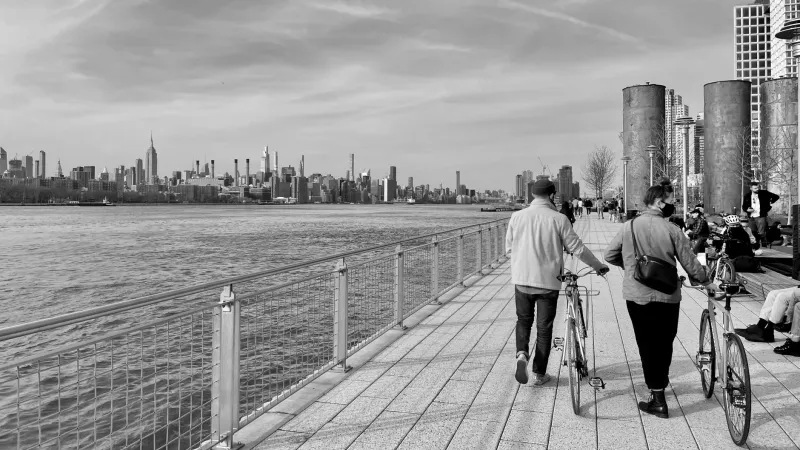
It means being able to get there without a car. A lot of the newer access projects in the region are being designed with transit connections in mind — proximity to Metro-North stations, bus stops, and bike infrastructure. If you have to drive to enjoy the river, you've already excluded a significant chunk of the people who live closest to it.
It means amenities that actually work. Restrooms. Shade. Seating. Safe, maintained paths. These aren't luxury features — they're the difference between a park that gets used and one that becomes overgrown and ignored.
It means programming. Physical access is just the beginning. Free kayak rentals, fishing clinics, guided nature walks, community clean-up days — these are the things that turn a park into a gathering place. Several sites along the Hudson now offer free or low-cost paddling programs specifically targeted at first-time users, and the demand has been consistently strong.
Getting Out There
If you're in the region and want to explore what's newly available, the options are more plentiful than most people realize. The Hudson River Greenway Water Trail — a mapped paddling route stretching the length of the river — includes dozens of public access points, many of them free. The New York State Office of Parks, Recreation and Historic Preservation maintains a list of Hudson Valley access sites, and organizations like Scenic Hudson have developed their own network of river-access preserves, many of them free and open year-round.
For those in New York City, the Downtown Boathouse offers free kayaking on the Hudson at multiple locations during the warmer months — no experience required, no fee. It's one of the most underused free activities in the entire city, which tells you something about how badly the word still needs to get out.
Why This Matters Beyond Recreation
It would be easy to frame this as a feel-good parks story, but there's something deeper going on. Research consistently shows that access to green and blue spaces — rivers, parks, waterfront areas — has measurable effects on mental health, community cohesion, and even property values over time. In neighborhoods that have historically been underinvested, a well-used waterfront park can become an anchor.
There's also an environmental angle that's easy to overlook. Communities that have a relationship with a river — that fish it, paddle it, walk along it — tend to care more about protecting it. The generation of young people from the South Bronx who've learned to row on the Hudson are not going to stand by quietly if that water gets polluted. They have a stake in it now. That's not an accident. That's the point.
The Hudson has been through a lot. Industrial pollution, decades of neglect, hard-fought cleanup battles. The fact that it's now clean enough to swim in, healthy enough to support a recovering fishery, and beautiful enough to draw people from across the region — that's a genuine success story. Making sure that story belongs to everyone, not just the people lucky enough to have always lived near the good parts of the waterfront, is the next chapter.
And from where we're standing, it's a pretty exciting one.