What the River Knows That You Don't: Hard-Won Safety Lessons From the People Who Rescue Us
There's a version of the Hudson River that shows up in photographs — wide, silver, and impossibly still at golden hour. Kayakers drifting past the Catskills. A jon boat anchored in the shallows. A paddleboarder cruising toward the Palisades without a care in the world.
Then there's the version that the people who pull boaters out of it know.
That Hudson has moods. It shifts without warning. It hides things. And every summer, it catches people off guard who assumed that a big, slow-looking river couldn't possibly be dangerous.
"People see it from the shore and think it's basically a lake," says Dave Kellner, a longtime volunteer with a Hudson Valley river rescue unit who asked us not to name his specific station. "It's not a lake. It's a tidal estuary with commercial traffic, hidden structure, and temperature swings that can cause cold shock in the middle of July. It's beautiful. It's also unforgiving if you're not paying attention."
The Tide Is the Thing Nobody Talks About
Most people know the Hudson is tidal. Fewer people actually account for it before they put a boat in the water.
The river's tidal influence stretches roughly 150 miles north from New York Harbor all the way up to the Federal Dam in Troy. That means the water you're paddling isn't just moving in one direction — it's pushing and pulling twice a day, and the strength of that current varies dramatically depending on where you are, what time it is, and what the moon is doing.
At spots like Haverstraw Bay, where the river widens dramatically, the tidal current can feel almost negligible. But pinch points — narrow sections near bridges, around islands, or where tributaries dump into the main channel — can turn that same tide into something that will push a kayak sideways faster than most paddlers can correct.
"I've watched experienced sea kayakers get caught in the current near the Tappan Zee and spend twenty minutes fighting to move fifty yards," says Maria Suarez, a certified river guide based in the mid-Hudson Valley who has been leading group paddles for over a decade. "It's not dangerous if you know it's coming. It's very dangerous if it surprises you when you're already tired."
The fix is simple: check the tidal charts before you launch. Apps like Tides Near Me or the NOAA tide prediction tool make this easy. But more importantly, build extra time into your trip. Paddling against a strong ebb tide isn't just exhausting — it can strand you miles from your takeout point as the light fades.
Eddies: The River's Quiet Ambush
An eddy is a pocket of water that spins in the opposite direction from the main current, usually forming on the downstream side of an obstacle — a bridge piling, a large rock, a point of land jutting into the river. Experienced whitewater paddlers learn to love eddies. They're rest stops, staging areas, and navigation tools.
On the Hudson, eddies are sneakier. The obstacles creating them are often underwater, which means you can't always see where the eddy line is until you've already crossed it.
Eddy lines — the boundaries between the main current and the spinning counter-current — can flip a canoe or kayak almost instantly if you hit them at the wrong angle. The boat catches two different currents at once, and if your weight isn't balanced just right, you're swimming.
"We see this a lot near the old industrial piers," Kellner says. "There's submerged structure everywhere on this river. Old pilings, riprap, dumped fill. It all creates hydraulics that aren't charted anywhere. The only way to know about them is to have spent a lot of time on the water in that specific spot."
This is where local knowledge becomes genuinely lifesaving. Before you paddle a new stretch of the Hudson, talk to someone who's done it recently. Local paddling clubs, outfitters, and fishing guides are goldmines of exactly this kind of information. They know where the weird currents live.
Cold Water in a Warm Month
Here's something that catches people every single year: the Hudson can be dangerously cold well into late spring, and in some years, into early summer. Air temperature and water temperature are not the same thing, and your body doesn't care what the thermometer on the dock says.
Cold shock — the involuntary gasp reflex that happens when your body hits cold water — can cause immediate drowning even in strong swimmers. It bypasses your ability to think or react. If the water temperature is below 60°F, falling in without a life jacket is a genuine emergency.
"People launch in May wearing shorts because it's 75 degrees outside," says Petty Officer First Class James Tran, a Coast Guard veteran who served multiple tours on Hudson River patrol. "They're not wearing their PFD because they're hot. They go in the water and the gasp reflex takes over. That's how people drown on warm days."
The rule from every professional we spoke to was consistent: wear your life jacket, not just carry it. On the Hudson, there's no such thing as conditions calm enough to skip it.
Commercial Traffic and the Wake Nobody Sees Coming
The Hudson is a working river. Tankers, barges, and tour boats share the water with recreational boaters, and the wakes they generate are larger and longer than most people expect — especially from the big freight vessels moving through the main channel.
"A loaded barge moving at eight knots can throw a wake that takes two or three minutes to reach you after it passes," Suarez explains. "People relax when the boat goes by and then get hit when they're not looking."
If you're near the main shipping channel, keep watching for a full five minutes after any large vessel passes. And if you're in a small kayak or canoe, angle your bow into the wake rather than taking it broadside. It's basic seamanship, but it's not intuitive if you haven't been taught.
The People Who Show Up When Things Go Wrong
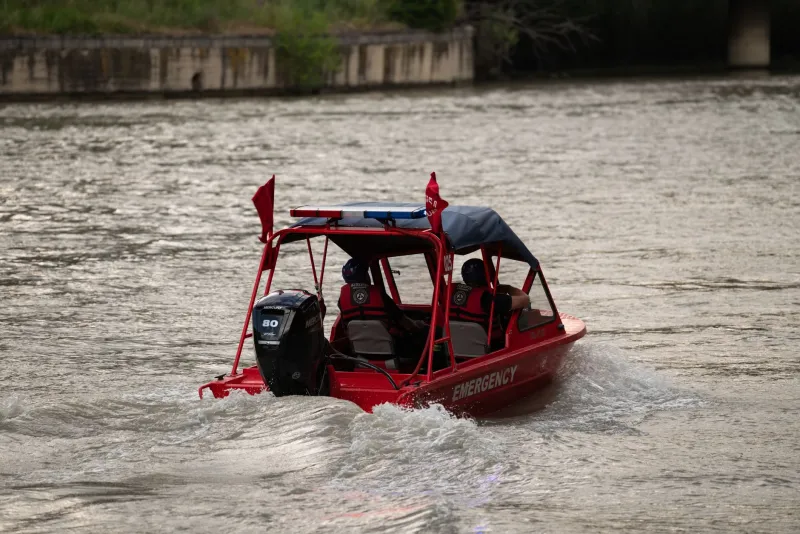
Behind every close call on the Hudson is usually someone who got there fast — a volunteer with a water rescue team, a Coast Guard crew running a patrol, a private boater who turned around when they saw someone in trouble.
These folks aren't looking for credit. But they do want you to do a few things before you head out: file a float plan with someone onshore, carry a charged phone in a waterproof case, know the VHF Channel 16 hailing frequency if you have a radio, and for the love of everything, wear your PFD.
"The rescues that go well are the ones where someone on shore knew where they were supposed to be and when," Kellner says. "The ones that go badly are the ones where nobody knew they were out there until they didn't come home."
The Hudson River is worth every minute you spend on it. It's also worth the ten minutes you spend preparing before you push off the bank. The river doesn't hold grudges — it just doesn't make exceptions.
Paddle smart. Fish hard. Come home.