Sunken and Forgotten: The Shipwrecks Hiding Beneath the Hudson and the Divers Who Can't Leave Them Alone
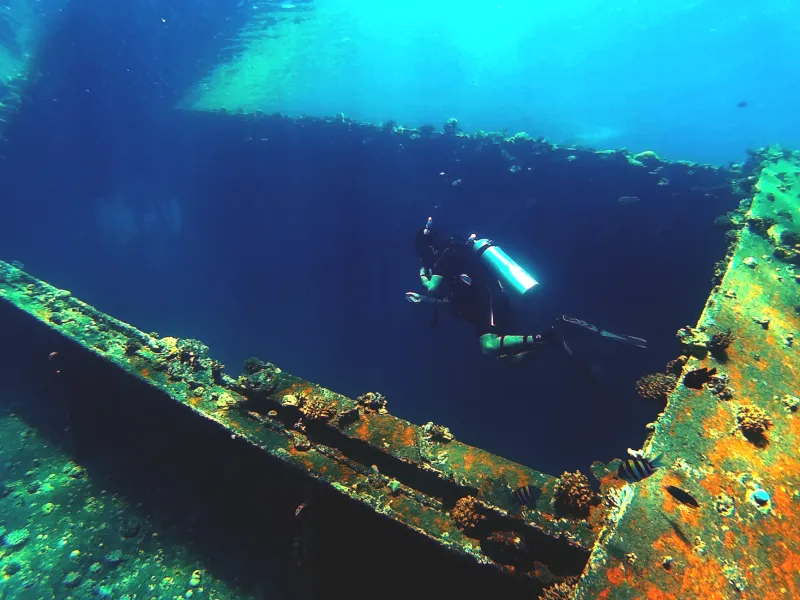
Most people see the Hudson as a surface. A ribbon of water to cross, to fish, to paddle, to watch turn gold at sunset. But drop below that surface — past the tidal churn and the murk — and you enter a completely different world. One that's been quietly accumulating history for centuries.
The Hudson River is, depending on who you ask, either one of the most underappreciated wreck diving destinations on the East Coast or one of the most stubbornly overlooked. Somewhere between those two opinions lives a small but intensely passionate community of divers, maritime archaeologists, and river historians who have made it their mission to find, document, and protect what's down there. And what's down there, it turns out, is a lot.
A River That Has Seen Everything
The Hudson has been a working waterway for as long as people have lived near it. Indigenous peoples paddled its length for thousands of years. European colonizers turned it into a trade corridor in the 1600s. By the 1800s, it was one of the busiest commercial rivers in the country — choked with sloops, steamboats, ferries, ice barges, and tugboats hauling everything from bricks to coal to livestock.
Where there's that much traffic, there are accidents. Storms. Collisions. Fires. Vessels that simply wore out and were scuttled rather than repaired. The river absorbed all of it.
Estimates vary, but maritime historians believe there are dozens — possibly more than a hundred — submerged wrecks scattered along the Hudson's 315-mile length. Some are well-documented. Most are not.
"People think of shipwrecks and they picture the Caribbean or the Great Lakes," says one dive instructor based out of the mid-Hudson Valley who has been exploring local wrecks for over fifteen years. "But the Hudson has just as much history, and in some ways it's more interesting because it's so layered. You've got colonial-era vessels sitting near 20th-century industrial barges. It's wild."
Revolutionary Relics and Industrial Casualties
Some of the most historically significant wrecks date to the Revolutionary War. In 1777, American forces deliberately sank a line of vessels near Fort Montgomery to block British naval advancement up the river — a desperate defensive strategy that ultimately failed but left behind an underwater archaeological record that researchers are still piecing together today.
Further downstream, remnants of early 19th-century steamboats — the Hudson was the proving ground for Robert Fulton's famous Clermont in 1807 — have been located in varying states of deterioration. Wood doesn't last forever underwater, especially in a tidal river with shifting sediment, but iron fittings, anchors, and hull fragments can endure for generations.
The 20th century contributed its own casualties. Railroad car floats, which were flat barges used to ferry freight cars across the river before bridges made them obsolete, were routinely abandoned or sunk in shallow coves when they outlived their usefulness. Several of these hulking metal platforms still rest in relatively shallow water along the river's edges, their steel frames now draped in zebra mussels and river grass.
What the Divers Actually Find Down There
Diving the Hudson is not exactly glamorous. Visibility is often measured in inches rather than feet, especially after rain events stir up the sediment. Currents can be unpredictable and strong. The water runs cold for much of the year, demanding dry suits and serious thermal protection.
And yet, the divers keep going back.
"There's something about putting your hand on a ship's timber that's been sitting there since the 1800s," says one wreck enthusiast who documents her dives with underwater photography. "You can't replicate that feeling. You're touching history in a way that no museum can give you."
What divers typically encounter depends heavily on location and depth. Shallower wrecks near the banks tend to be more deteriorated — exposed to more biological activity, wave action, and recreational boat traffic. Deeper sites, particularly in the main channel where sedimentation is heavier, sometimes yield remarkably preserved artifacts: intact bottles, ceramic fragments, iron hardware, even sections of wooden decking that have been sealed beneath layers of silt for over a century.
Documentation is a major focus for the more serious members of the community. Working with waterproof cameras and dive slates, they map wreck sites, photograph structural details, and cross-reference their findings with historical harbor records, newspaper archives, and insurance documents from the era. It's painstaking work that often happens in near-zero visibility, but the results feed directly into a growing body of knowledge about the Hudson's maritime past.
Unexpected Ecosystems
Here's something that might surprise you: those sunken hulks aren't just historical artifacts. They're thriving habitats.
In a river that spent much of the 20th century as an ecological disaster zone — heavily polluted by industrial discharge, stripped of much of its native biodiversity — the wrecks have quietly become refuges. Hard substrate is relatively rare in a river dominated by soft sediment, and sunken vessels provide exactly the kind of structure that fish, invertebrates, and aquatic plants need to establish themselves.
Striper anglers have known this for years. Ask around at any Hudson River marina and someone will mention fishing near "the old wreck" in hushed, proprietary tones. Largemouth bass, perch, catfish, and yes, striped bass cluster around submerged structure the same way their saltwater cousins hover over offshore reefs. What started as a graveyard became, over time, a garden.
Marine biologists studying the Hudson's ongoing recovery have taken note. Several wreck sites have been informally monitored as ecological reference points, places where you can observe how a recovering river ecosystem establishes itself around available habitat. The results have been genuinely encouraging.
Protecting What's Left
Not everyone who finds a wreck treats it with care. Artifact removal — illegal under federal and state law for historically significant sites — remains a persistent problem. Anchors dragged across shallow wrecks by recreational boaters cause damage that can't be undone. Development projects along the riverbank have disturbed or destroyed submerged sites without anyone realizing what was there.
Advocates within the wreck diving community have pushed for better inventory and protection of known sites, arguing that the Hudson's underwater heritage deserves the same attention that's been lavished on its above-water historical landmarks. Progress has been slow, but there's growing collaboration between diving clubs, river conservation organizations, and state historic preservation offices to at least get a clearer picture of what exists and where.
"The first step is just knowing what's down there," says one advocate who has been lobbying for a formal Hudson River maritime heritage survey. "You can't protect something you don't know exists."
Getting Involved
If this has you itching to strap on a tank and go exploring, pump the brakes just a little. Wreck diving in the Hudson is not a beginner's activity. The conditions demand experience, proper gear, and ideally a dive buddy who knows the river well. Several dive shops and clubs in the Hudson Valley offer guided introductory dives for certified divers looking to get their first taste of freshwater wreck exploration — that's the smart way in.
For those who prefer to keep their feet dry, the history is accessible too. Local historical societies along the river, particularly in towns like Kingston, Newburgh, and Hudson, maintain archives that touch on the maritime past. The river's story didn't all happen on the surface.
Some of the best chapters are still down there, waiting to be read.