Paddle, Discover, Repeat: Why Thousands Are Trading the Sidewalk for the Hudson
The River Was Always There. People Just Forgot to Look.
For decades, the Hudson River was something most New Yorkers experienced through a window — on the train, from a highway overpass, maybe from a bench at a waterfront park if they were feeling ambitious. It was backdrop, not destination. But something has shifted in a big way, and if you've been anywhere near a Hudson River launch site on a Saturday morning lately, you already know what we're talking about.
Kayaks. Hundreds of them.
From Yonkers to Kingston, from Hoboken to Haverstraw, paddlers are showing up at dawn with gear strapped to car roofs, renting sit-on-tops at outfitter docks, and slipping quietly onto one of America's most storied waterways. The Hudson River kayaking scene has gone from niche hobby to full-blown movement — and the water, cleaner now than it's been in over a century, is more than ready to welcome them.
What's Driving the Paddle Rush?
Ask anyone who's recently made the leap from landlubber to paddler, and you'll hear some version of the same answer: they needed out.
"I'd been staring at the same four walls for way too long," says Marisol Vega, a graphic designer from the Bronx who took her first kayak lesson at a community program in Inwood two summers ago. "A friend dragged me down to the river and I basically never came back to shore. It sounds dramatic but it genuinely changed how I feel about living in this city."
Vega's story is increasingly common. The pandemic-era hunger for outdoor space cracked open a door that the region's growing network of kayak outfitters was ready to walk through. Programs expanded, gear became more affordable, and the cultural conversation around the Hudson shifted from industrial relic to living waterway.
The ecological turnaround didn't hurt either. Decades of conservation work following the Clean Water Act have made the Hudson a genuinely different river than the one that earned its "Superfund" reputation. Striped bass are back. Bald eagles nest along its banks. Great blue herons stalk the shallows. Get out on the water at eye level, and you're not just paddling — you're moving through a functioning ecosystem that most people never get close enough to appreciate.
The Outfitters Making It Happen
None of this happens without the people who've made access their whole mission.
At Hudson River Expeditions in Cold Spring, owner Dave Lent has watched his customer base transform over the past several years. "When I started, it was mostly hardcore outdoor types — people who already had a camping background or had paddled somewhere else," he says. "Now I'm teaching absolute beginners every weekend. Office workers. Grandparents. Teenagers who've never been on a boat in their lives. The river is genuinely democratic in a way that I don't think people expected."
Lent's shop offers guided tours that wind through the dramatic Hudson Highlands, where the river narrows between steep forested ridges and the water turns dark and deep. It's a stretch that rewards slow travel — the kind you simply can't do from a car window.
Further south, outfitters in the lower Hudson have capitalized on the urban market in a different way, offering sunset paddles, full-moon tours, and yoga-on-the-water experiences that blend wellness culture with river access. It's not traditional outdoor recreation, but it's getting people on the water, and that's what matters.
Hidden Spots Worth Paddling To
One of the genuine joys of kayaking the Hudson is discovering that the river is full of surprises. Some of the best spots aren't on any tourist map.
The coves and inlets along the Tivoli Bays in the mid-Hudson Valley, for instance, offer an almost otherworldly experience — shallow freshwater marshes teeming with waterfowl, frogs, and aquatic vegetation that feels a world away from the main channel. Paddlers who venture in early on a still morning often describe it as one of the most peaceful places they've ever been.
Further downriver, the area around Piermont Marsh in Rockland County gives paddlers a window into one of the Hudson's most important tidal wetlands. The narrow channels that thread through the marsh are navigable only by small watercraft, which means kayakers have access to a place that most people never see.
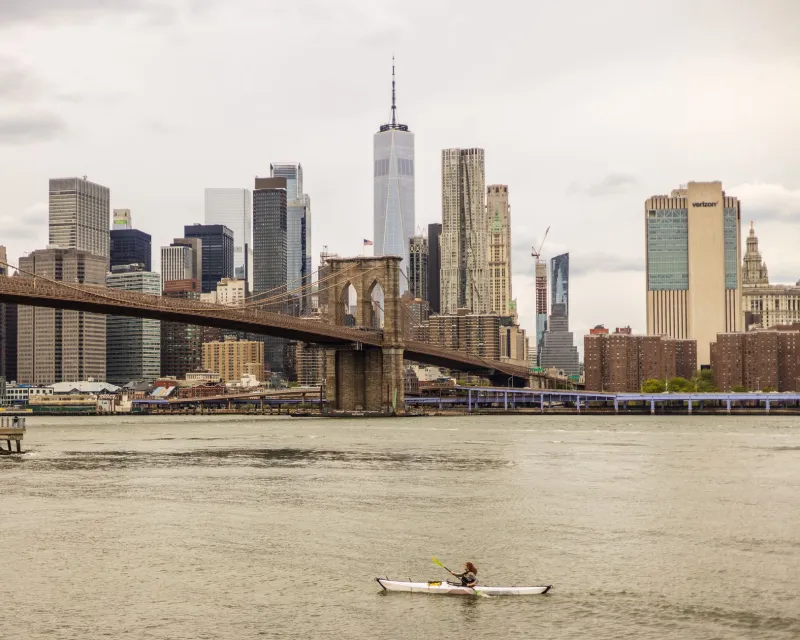
And then there's the simple pleasure of paddling parallel to the Palisades — those dramatic basalt cliffs that line the Jersey side of the river — and looking back at the Manhattan skyline from a vantage point that almost no one gets to experience.
Getting Started: What You Actually Need to Know
If you've been curious but haven't pulled the trigger yet, here's the honest beginner's breakdown.
You don't need your own gear to start. Every major outfitter along the river rents kayaks and paddleboards by the hour, half-day, or full day. Rental prices typically run between $20 and $50 depending on the location and type of craft. Bring sunscreen, water, and clothes you don't mind getting wet.
Take a lesson before you go solo. The Hudson is a tidal river with real current and real boat traffic. A two-hour beginner clinic will teach you how to read the water, handle your paddle efficiently, and stay safe around commercial vessels. Most outfitters offer these, and they're worth every penny.
Respect the tides. The Hudson is tidal as far north as Troy, which means conditions change throughout the day. Paddling with the tide is effortless. Paddling against it is a workout. Check tide charts before you launch — they're free online and make a huge difference in your experience.
Wear your life jacket. No exceptions, no negotiations.
The Community You Didn't Know You Were Joining
Here's something that surprises a lot of new paddlers: the kayaking community on the Hudson is genuinely welcoming in a way that outdoor communities don't always manage to be.
Group paddles organized through local clubs and nonprofits happen almost every weekend during the warmer months. Organizations like Hudson River Community Sailing and various watershed groups run free or low-cost programs specifically designed to bring new people onto the water, with a particular focus on communities that have historically had less access to outdoor recreation.
For Marisol Vega, that community aspect ended up being as important as the paddling itself. "I've met people out there I never would have crossed paths with otherwise," she says. "There's something about being on the water together that breaks down a lot of the walls that usually exist in the city."
The Hudson has always been a connector — a geographic spine running through one of the most densely populated corridors in the country. Kayaking just happens to be one of the best ways to feel that connection directly, one paddle stroke at a time.