Silver Bullets and Muddy Boots: Chasing the Hudson's Great Shad Migration
When the River Wakes Up
There's a moment each spring when the Hudson River seems to exhale. The water temperature creeps up past 50 degrees, the trees along the banks start showing green, and somewhere out in the Atlantic, millions of American shad turn their noses toward the river where they were born and start swimming home.
For the anglers who've been waiting all winter — tying darts, rigging rods, checking water temperature charts with the intensity of a meteorologist — that moment is everything.
The shad run on the Hudson River is one of the great annual events in northeastern fishing, and it draws a devoted following that stretches from weekend warriors to lifelong river men who've been working the same bends and eddies for forty years. Ask any of them why they show up year after year, and the answers tend to circle around the same themes: tradition, spectacle, and a bone-deep appreciation for a fish that almost wasn't there at all.
A Fish With History
American shad — Alosa sapidissima, the most sapid, or flavorful, of all the herrings — were once the Hudson's most economically significant fish. Indigenous peoples harvested them for centuries. Colonial settlers counted on the spring run to replenish food stores after the lean winter months. George Washington famously fed his troops at Valley Forge on salted shad. Through the 19th century, the Hudson shad fishery supported hundreds of commercial fishing families from the Battery to Albany.
Then came the 20th century, and with it, the familiar story: industrial pollution, habitat destruction, overfishing. By the 1970s, the shad run had collapsed to a fraction of its former abundance. The fish were still there, but the river they needed wasn't.
What happened next is one of the Hudson's most remarkable chapters — and one that shad fishermen talk about with visible emotion.
The Comeback
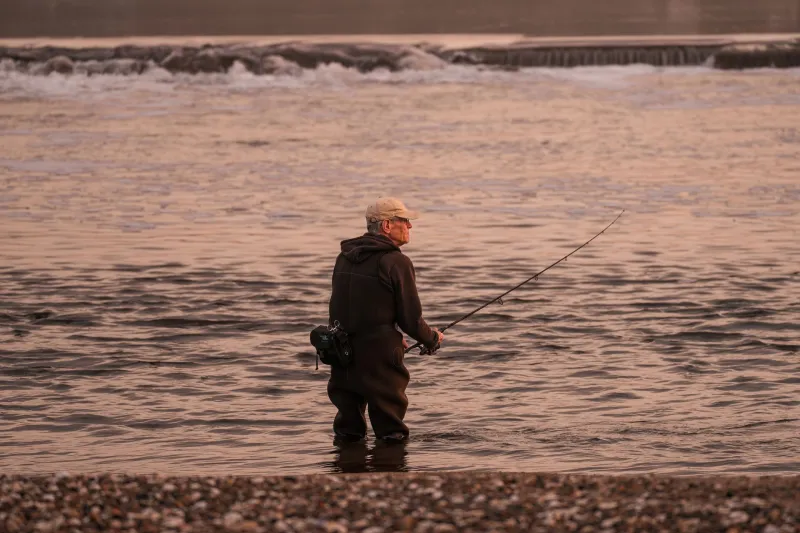
"I fished this river with my father in the sixties, and then there was a stretch where it just wasn't worth coming out," says Ray Kowalczyk, 71, who's been working the Hudson near Kingston for most of his adult life. "The water was bad. The fish were thin. You'd hear old-timers talk about what it used to be like and it seemed like a fairy tale."
Kowalczyk pauses, watching a cormorant work the surface fifty yards out.
"Now it's the fairy tale again."
The recovery of the Hudson's shad population is directly tied to the broader cleanup of the river — the result of decades of advocacy, legal battles, and the work of organizations like Riverkeeper and the Hudson River Foundation. As water quality improved and commercial netting pressure decreased, shad populations began to rebound. The fish, which can live up to seven years and return to spawn multiple times, responded to a cleaner river with something that looked a lot like enthusiasm.
Today, the Hudson shad run is considered one of the most significant on the East Coast, drawing fish from as far south as Florida's rivers and as far north as the St. Lawrence. The spectacle of it — millions of silver-sided fish pushing upriver through the spring current — is something that never quite loses its power, even for people who've watched it dozens of times.
Reading the Run: Timing and Location
Shad fishing on the Hudson is as much about timing as technique, and the window moves every year based on water temperature.
Generally speaking, shad begin entering the lower Hudson in April, with fish typically reaching the mid-river area around Kingston and Catskill by mid-to-late April and pushing toward the Troy Dam by early May. The traditional peak of the run — the period when fish are most concentrated and most actively feeding — usually falls somewhere in the last two weeks of April through the first week of May, though this varies year to year.
Water temperature is the most reliable guide. Shad move aggressively when temperatures are in the 55 to 65 degree range. Too cold and they hold back; too warm and the run can push through quickly.
For location, the lower and mid-Hudson offer the most accessible options for shore anglers. Popular stretches include the area around the Newburgh-Beacon Bridge, the Catskill waterfront, and the banks near Coxsackie. Boat anglers tend to target the deeper channel edges and current breaks where shad pause to rest during their upstream push.
The Gear and the Method
Shad fishing has its own aesthetic, built around a peculiar little lure called a dart — a small, weighted jig, usually half an ounce or less, in bright colors that seem designed more to appeal to fishermen than fish. White, chartreuse, pink, and red are traditional favorites, though shad anglers will argue about color preferences with the same conviction that wine drinkers debate vintages.
The standard rig involves two darts tied in tandem on a light spinning or ultralight rod, cast across the current and allowed to swing downstream in a slow arc. When a shad hits — and when the run is on, they hit often — the fight is immediate and electric. These are strong, acrobatic fish that jump and run with a ferocity that their modest size doesn't suggest. On light tackle, a two-pound shad feels like a much bigger deal.
"People always underestimate them," says longtime Catskill-area guide Teresa Marchetti, who runs shad-focused trips each spring. "They think because it's a small fish it won't put up much of a fight. Then they hook one and they're laughing and hollering and completely hooked themselves."
Beyond the Fishing
The shad run carries weight beyond the sport of it. For many Hudson Valley communities, the return of shad each spring is a cultural touchstone — a reminder of the river's long relationship with the people who live along its banks.
The annual Shad Festival in Lambertville, New Jersey, just across the Delaware from New Hope, Pennsylvania, draws crowds celebrating the fish as a regional icon. Up and down the Hudson, the shad run quietly marks the end of winter in a way that no calendar date quite manages.
For Kowalczyk, the significance runs even deeper. He grew up hearing his grandfather describe the old commercial shad fisheries, the net boats, the smokehouses, the way the whole river economy turned on the spring migration. He never expected to see anything like that abundance again.
"Every year I'm out here, I think about that," he says. "What it took to get the river back to this. All the people who fought for it who never got to see it."
He casts again, the line arcing out over the gray-green water.
"The shad don't know any of that. They just come back because that's what they do. But we know. That's the point."
How to Join the Tradition
If you've never chased shad on the Hudson, this spring is as good a time as any to start. Licenses are required — a New York State fishing license runs about $25 for residents annually and is available online through the DEC. Gear is minimal and inexpensive: a light spinning rod, a handful of darts, and the willingness to stand on a riverbank at 6 a.m. in weather that can't quite decide if it's winter or spring.
Many outfitters and guides along the river offer shad-specific trips during the peak weeks, which is a smart way to get oriented if you're new to the fishery. And the Hudson River Fishermen's Association and similar groups often host community fishing events during the run that welcome newcomers.
The shad don't care if you've been fishing the Hudson for fifty years or fifty minutes. They're just doing what they've always done — coming home to a river that's finally worth coming home to.