After Dark on the Hudson: Your Guide to Nocturnal Fishing, Stargazing, and River Magic After Sunset
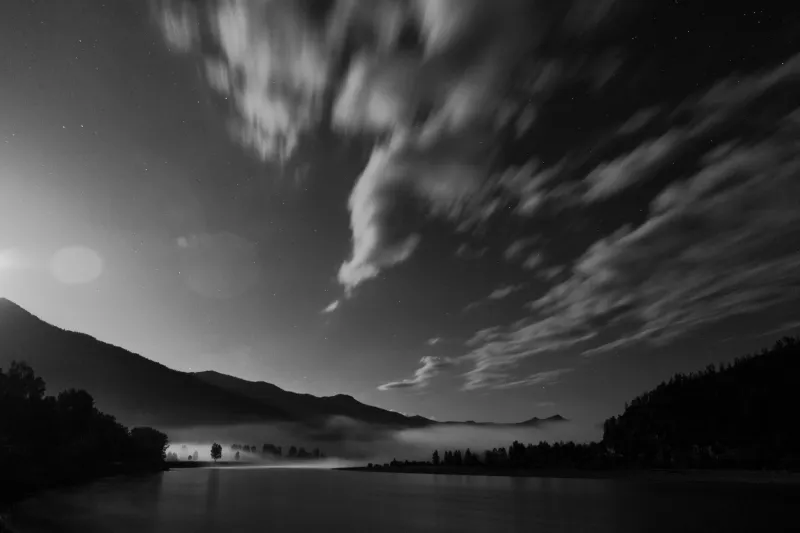
Something happens to the Hudson River around 9 p.m. on a summer night.
The jet skis are gone. The tour boats have docked. The kayakers have hauled out and driven home. What's left is the river itself—wide, dark, and moving with a quiet authority that's easy to miss when you're surrounded by noise and activity. If you've never experienced the Hudson after sunset, you're skipping the best part of the show.
Night on the river isn't for everyone. It takes a little preparation and a willingness to trade comfort for something harder to name—a sense of the place that only comes when the distractions fall away. But for those willing to make the trip, the rewards are real and, occasionally, genuinely spectacular.
Fishing After Dark: Why Nighttime Is Prime Time
Serious Hudson River anglers have known this for years: some of the best fishing happens after most people have gone to bed.
Channel catfish and blue catfish are the obvious targets. Both species are highly active at night, moving into shallower water to feed once the sun goes down. They rely heavily on scent rather than sight, which means stinkier baits—cut fish, chicken liver, prepared catfish dough baits—work particularly well in the dark. Find a spot with some structure nearby (a rocky point, a dock, a submerged ledge) and be patient. Catfish don't rush.
Striped bass are another story entirely. Stripers that spend the daylight hours holding in deeper water often move aggressively into current seams and shallower flats after dark. Surface lures—poppers, walk-the-dog style plugs—can produce explosive topwater action that feels almost surreal in the quiet of a summer night. There's nothing quite like watching a big striper blow up on a surface lure when the only light comes from the moon.
Eels are worth mentioning too, if you can get past the handling. They're a prime striped bass bait and they're most effectively targeted after dark, when they're actively feeding near the bottom.
A few practical notes: bring a headlamp with a red-light mode (red preserves your night vision and is less likely to spook fish), rig your tackle before it gets dark, and let someone know where you're going. Night fishing is safe when you're prepared and reckless when you're not.
The Best Spots to Set Up After Sunset
Not all stretches of the Hudson are created equal for after-dark adventures. Here are a few that consistently deliver.
Croton Point Park in Westchester County has a long fishing pier that's accessible after dark and offers wide, relatively unobstructed views of the river and sky. The point juts into the Hudson at a spot where currents converge—good for fish, and far enough from major light pollution to make stargazing genuinely worthwhile.
Greenport Conservation Area near Hudson, New York, is a quieter option in the northern section of the valley. The low riverbank access and minimal development in the surrounding area make it one of the darker sky locations you'll find this close to the river.
Norrie Point in Staatsburg offers a boat launch and access to some gorgeous stretches of the estuary. Night kayaking from here, when conditions are calm, puts you in the middle of the river with nothing but water and sky in every direction.
Iona Island (accessible by car via the Bear Mountain area) sits at the mouth of Doodletown Bay and provides a vantage point that feels genuinely remote despite being a short drive from the Palisades Parkway.
Stargazing Along the River
The Hudson Valley isn't the darkest sky territory in the Northeast—the glow of New York City makes sure of that south of Westchester—but the mid- and upper-valley sections offer surprisingly good conditions on clear nights, particularly if you're positioned on the eastern bank looking west toward the Catskills.
The Catskills themselves block a significant portion of the western light pollution, and if you're standing on the riverbank between, say, Kingston and Hudson on a moonless night, the sky can be legitimately impressive.
The Perseids in August and the Leonids in November are the marquee meteor showers for Hudson Valley stargazers. Both peak after midnight, which conveniently aligns with the best nocturnal fishing hours. Bring a blanket, prop your rod in a holder, and watch the sky while you wait for a bite. It's a surprisingly effective multi-tasking strategy.
For more serious sky-watching, the Catskill Center and various local astronomy clubs occasionally organize public observation events at dark-sky-friendly locations in the region. These are worth seeking out if you want guidance on what you're looking at.
Bioluminescent Kayaking: When the River Glows
This one requires some timing and a bit of luck, but it's worth knowing about.
Under the right conditions—typically warm summer nights, calm water, and elevated concentrations of certain phytoplankton—the Hudson can produce bioluminescence. Paddle your hand through the water, or drag your blade through the surface, and you might see a faint blue-green glow trailing behind you.
It's not as dramatic as the famous bioluminescent bays in Puerto Rico or the Maldives, but it's real, it happens, and it's completely free if you're already out on the water. The conditions are most likely to occur in late summer, particularly in calmer coves and backwater areas rather than in the main channel. Keep an eye on water temperature reports and phytoplankton bloom forecasts if you want to chase this one intentionally.
Several kayak outfitters in the Hudson Valley have started offering guided night paddles during summer months. These are a great option if you're new to night kayaking and want someone who knows the water to lead the way.
The Moonlit Picnic Angle
Not every after-dark river experience needs to involve a fishing rod or a kayak. Sometimes the best thing you can do is bring a blanket, some good food, and a person you like, and just sit by the water while the moon does its thing.
Full moon nights on the Hudson are something else. The light hits the water differently depending on the season—cold and sharp in winter, warm and diffuse in summer—and the river has a way of reflecting it that feels almost theatrical. Spots with unobstructed eastern horizons are best for moonrise watching, which tends to happen fast and dramatically.
Local farm stands and markets in the valley are full of good picnic material: cheese from local creameries, bread from the area's excellent bakeries, whatever fruit is in season. Pair that with a thermos of coffee or a bottle of something from one of the region's wineries, and you've got an evening that costs almost nothing and delivers more than most ticketed events.
A Few Things to Keep in Mind
Before you head out after dark, a quick checklist:
- Check access hours. Some parks close at sunset. Know before you go.
- Tell someone your plans. Basic safety, non-negotiable.
- Dress for the temperature drop. Even in summer, river nights can get surprisingly cool after midnight.
- Respect the quiet. The people who love the river after dark tend to love the silence that comes with it. Keep noise to a minimum.
- Leave no trace. This one goes without saying, but it goes without saying every time.
The Hudson by day is beautiful. The Hudson after dark is something different—quieter, stranger, and somehow more honest about what it actually is. Go find out for yourself.