Back from the Brink: Meet the People Fighting to Bring Native Fish Back to the Hudson
There's a photo that floats around in Hudson River conservation circles—a black-and-white shot from the early 1900s showing a commercial fisherman standing next to a sturgeon so large it could have doubled as a piece of furniture. The fish is enormous. The fisherman looks almost apologetic about it.
That image tells a story. Not just of abundance, but of what we nearly threw away.
For most of the 20th century, the Hudson River was in rough shape. Industrial dumping, overfishing, and a web of physical barriers—dams, culverts, blocked tributaries—turned one of the East Coast's most productive fish highways into something closer to a drainage ditch. Species that had thrived here for thousands of years disappeared or dwindled to fractions of their former numbers.
But something is shifting. Slowly, stubbornly, and with a whole lot of human help, native fish are finding their way back.
The Species at the Center of It All
When people talk about Hudson River restoration, a few names come up again and again.
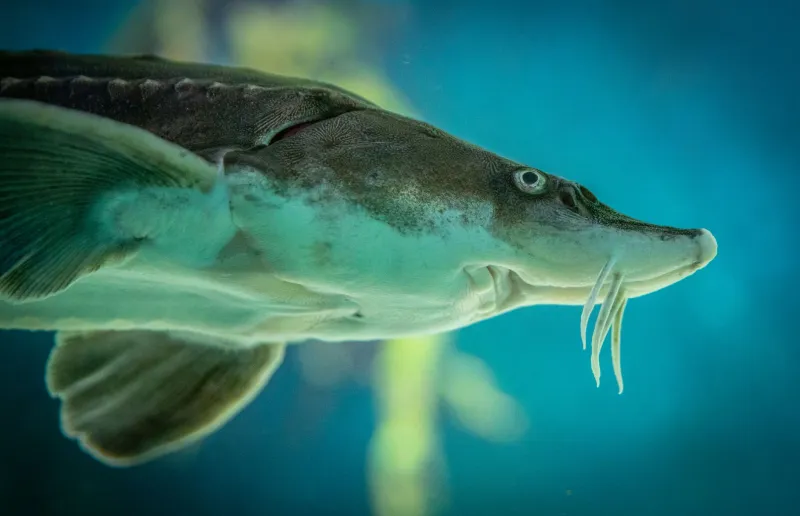
Atlantic sturgeon are the headliners. Ancient, armor-plated, and capable of living over 60 years, these fish were once so plentiful in the Hudson that the river was nicknamed the "Caviar Coast" in the 19th century. Overharvesting and habitat loss cratered their numbers so severely that the federal government listed them as endangered in 2012. Today, researchers from institutions like Stony Brook University and the New York State Department of Environmental Conservation are using acoustic tagging to track individual fish as they move through the estuary—piecing together migration patterns that were barely understood even a generation ago.
American shad have a different story. Once the backbone of a massive commercial fishery and a cultural touchstone for Hudson Valley communities, shad populations collapsed through a combination of overfishing and blocked spawning access. Dams on tributary rivers cut off the upstream habitat these fish depend on to reproduce. The good news? Dam removal projects over the past two decades have reopened hundreds of miles of spawning habitat, and researchers are cautiously optimistic about early signs of recovery.
Then there's the river herring—alewife and blueback herring—smaller fish that most people overlook but that function as a critical food source for almost everything else in the ecosystem, including striped bass, osprey, and bald eagles.
Tearing Down the Walls
One of the most tangible wins in Hudson restoration hasn't involved a single fish. It's involved a bulldozer.
Dam removal has become one of the most effective tools in the conservationist's toolkit. Organizations like Riverkeeper and American Rivers have partnered with state agencies to identify and remove obsolete dams on Hudson tributaries—structures that were built for mills or small-scale industry that no longer exists but still block fish passage decades later.
The results can be startling. When a barrier comes down on a stream that hasn't seen migratory fish in 50 years, the fish sometimes show up within a single spawning season. It turns out that fish have a kind of ecological memory—they probe the edges of their habitat constantly, ready to push upstream the moment a path opens up.
"These fish aren't waiting for an invitation," says one fisheries biologist who has worked on multiple dam removal projects in the valley. "They just need the door open."
Citizen Science Is Doing Real Work Here
Here's the part that should genuinely excite anyone who spends time on or near the river: you don't need a PhD to contribute to this work.
Citizen science programs along the Hudson have become increasingly sophisticated—and increasingly essential. Volunteers are collecting water quality data, recording fish sightings, participating in spawning surveys, and helping researchers cover geographic ground that no single institution could manage alone.
Riverkeeper's water quality testing program, for example, relies on a network of trained volunteers who collect samples from dozens of sites along the river on a regular schedule. That data feeds directly into advocacy efforts and helps identify pollution sources that might otherwise go unnoticed.
The Hudson River Estuary Program, run through the New York State DEC, coordinates a range of volunteer monitoring initiatives, including fish population surveys that take place each spring during the shad migration season. If you've ever wanted to stand in a river counting fish with a scientist, this is your moment.
Early Wins Worth Celebrating
Restoration work is slow, and the people doing it are generally reluctant to declare victory. But there are genuine reasons for optimism.
Bald eagle populations along the Hudson—a species whose comeback is directly tied to a healthier river food web—have gone from near-zero in the 1970s to hundreds of nesting pairs today. Osprey, another fish-dependent raptor, have followed a similar arc.
Striped bass remain one of the river's signature species, and while their numbers fluctuate with broader coastal trends, the Hudson continues to function as a critical nursery habitat for the Atlantic Coast population.
And in recent years, researchers have documented increasing numbers of juvenile Atlantic sturgeon in the estuary—a hopeful sign that adults are successfully spawning somewhere upstream.
"Every juvenile we find represents a fish that made it," one DEC fisheries scientist noted during a recent survey. "It doesn't sound dramatic, but it is."
How You Can Get Involved
If this story has you fired up, here's where to start:
- Riverkeeper (riverkeeper.org) runs volunteer water quality monitoring programs and advocacy campaigns. Their annual Sweep the River cleanup event draws thousands of participants every spring.
- Hudson River Fishermen's Association has been fighting for the river since the 1960s and welcomes new members who want to get active.
- NY DEC Hudson River Estuary Program coordinates citizen science opportunities including fish monitoring, habitat surveys, and educational events. Check their calendar at dec.ny.gov.
- American Rivers tracks dam removal projects nationwide and has resources for anyone interested in supporting local barrier removal efforts.
You can also simply pay attention. Report unusual fish sightings to iNaturalist or to your regional DEC office. Keep your fishing gear clean when moving between water bodies to avoid spreading invasive species. Respect seasonal closures—they exist because the fish need them.
The Hudson has been through a lot. It's been used as a sewer, a dumping ground, and an afterthought. But the river is resilient in ways that continue to surprise even the scientists who study it every day. The fish are coming back. The question is whether we'll be smart enough—and patient enough—to let them.