Same River, Every Weekend: The Quiet Army Keeping the Hudson Clean One Bag at a Time
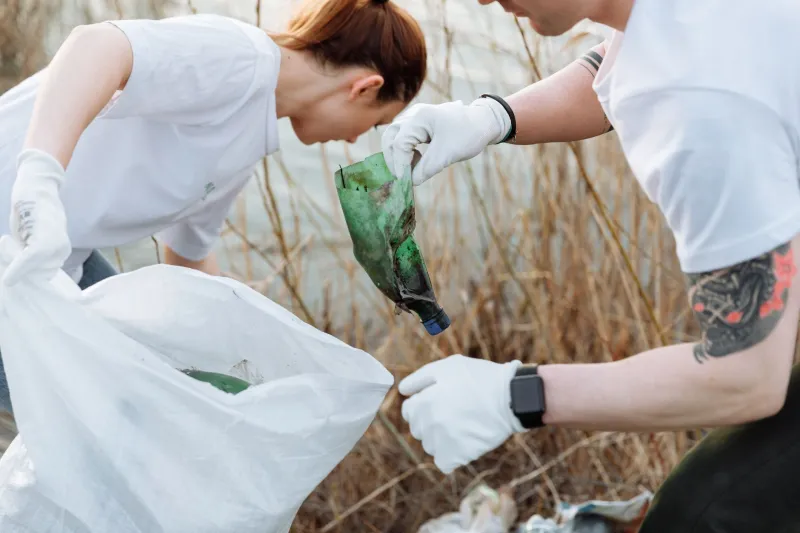
On a drizzly Saturday morning in late October, a woman named Denise is already elbow-deep in a tangle of fishing line and fast-food wrappers near a boat launch in Ulster County. She's been here before — literally. She shows up almost every weekend, and has for going on four years now. Nobody asked her to. Nobody pays her. She just keeps coming back.
"The first time I came out, I thought it would be a one-and-done kind of thing," she says, shaking mud off a cracked Styrofoam cooler before tossing it into an overflowing trash bag. "But then I started recognizing the same stretch of bank, and I started noticing when things got better. That's kind of addictive."
Denise is one of thousands of volunteers across the Hudson Valley who quietly commit themselves to regular river cleanups — not the big flashy Earth Day events that get the press coverage, but the smaller, unglamorous, every-single-weekend kind of work that actually moves the needle.
More Than a Day Trip
There's no shortage of one-time cleanup events along the Hudson. Organized by nonprofits, scout troops, church groups, and local municipalities, these mobilizations do real good. But ask the people who study riverine health, and they'll tell you that consistency matters just as much as scale.
Organizations like Riverkeeper, Clearwater, and dozens of local watershed groups have long championed the idea of "stewardship as habit" — the notion that a handful of people showing up every week can outperform a crowd showing up once a year. The math, when you think about it, isn't that complicated. Litter doesn't take weekends off. Neither do the volunteers who hate it most.
Groups like the Hudson Valley Cleanup Crew (a loosely organized collective that operates primarily through social media) have formalized this idea into a standing weekly commitment. Members claim sections of riverbank, track what they find, and report back to a shared log. It's citizen science meets community service, wrapped in muddy boots and a whole lot of camaraderie.
The People Behind the Gloves
Ask these volunteers what got them started, and you'll hear a remarkably diverse set of origin stories.
There's Marcus, a retired schoolteacher from Newburgh who started showing up after watching a great blue heron get tangled in a plastic bag near his neighborhood park. "I just couldn't walk away from that," he says. "And then I couldn't walk away the next week either."
There's Priya, a graduate student studying environmental policy at Bard College, who initially joined a cleanup as part of a class requirement and never stopped. "I thought I'd get my hours and be done," she admits. "But there's something about physically doing the work — not just reading about it — that changes you."
And then there's Tom and Linda, a retired couple from Rhinebeck who treat their Saturday morning cleanup like other people treat a farmers market run. "It's our thing," Linda says simply. "We bring coffee, we walk the bank, we pick up what we find. It's actually kind of peaceful."
What unites them isn't background or age or political affiliation — it's a personal relationship with the river that turned into a sense of responsibility. The Hudson, for all its industrial history and ongoing challenges, has a way of pulling people in.
What They Find Out There
Ask any longtime cleanup volunteer what they've recovered, and brace yourself for a list that reads like a yard sale gone wrong.
The usual suspects — plastic bottles, aluminum cans, cigarette butts, tangled fishing line, Styrofoam — make up the bulk of any given haul. But the Hudson has a way of delivering surprises. Volunteers have recovered shopping carts, car tires, entire sections of chain-link fence, a working blender (tested and confirmed), a vintage jukebox faceplate, and at least three separate shopping mannequins reported by different groups in different counties.
One group working a stretch near Catskill pulled out what turned out to be a mid-century cast iron stove, partially buried in the bank. It took four people and a hand truck. They were delighted.
"You never really know what you're going to find," says Marcus. "Some days it's heartbreaking — you see how much plastic ends up in the water, and it's overwhelming. But some days you pull out something so weird that you can't help but laugh. And then you keep going."
The data behind the finds matters, too. Groups that log their collections are feeding real information into regional waste tracking systems, helping researchers and policymakers understand where pollution is coming from and how it moves through the watershed. A discarded bottle in Yonkers doesn't always stay in Yonkers.
The Ripple Effect
Beyond the bags of trash, regular cleanup crews tend to generate something less tangible but equally valuable: community.
Long-term volunteers describe the social dimension of the work as one of the main reasons they keep coming back. Cleanup mornings have become informal gathering points — places where neighbors meet each other, where newcomers to the valley get connected, where kids tag along with parents and end up genuinely engaged with the river in a way that no classroom lesson quite replicates.
"My daughter started coming with me when she was seven," Denise says. "She's twelve now, and she runs her own section. She's more serious about it than I am."
That intergenerational transfer of river stewardship is something conservation advocates have been trying to engineer for decades. Turns out, sometimes all it takes is handing a kid a pair of gloves and letting them get muddy.
Local businesses have taken notice too. Several Hudson Valley outfitters and bait shops have started sponsoring cleanup crews — donating gear, covering the cost of disposal bags, or offering discounts to volunteers. It's enlightened self-interest, sure, but it's also a sign that the cleanup culture is becoming woven into the fabric of river communities.
How to Get Involved
If this is making you want to lace up your boots and head to the bank, good. That's the point.
Entry points are everywhere. Riverkeeper (riverkeeper.org) maintains a network of volunteer programs and can connect you with groups in your area. Clearwater's education and outreach programs often include stewardship components. Local Facebook groups and platforms like Meetup regularly post cleanup events across the valley, from Yonkers all the way up to Troy.
And if you can't find a group near you? Start one. All it takes is a box of garbage bags, a free Saturday morning, and the willingness to show up. The river — and the community that loves it — will meet you there.
Denise fills her fourth bag of the morning and ties it off with a practiced twist. The drizzle hasn't let up. She doesn't seem to notice.
"People always ask me if it feels futile," she says. "Like, does it even make a difference? And I just tell them to come out once and see. The river notices. I really believe that."
She grabs an empty bag and heads back toward the waterline. Same river. Next weekend.