Meet the People Who Watch Over Every Drop: Inside the Hudson's Hidden Water Quality Network
Before you drop a line or dip a paddle into the Hudson, someone has already been out there checking the water. A sprawling network of scientists, engineers, and passionate volunteers works around the clock to keep tabs on the river's health — and most of us have no idea they exist.
Think about the last time you went fishing on the Hudson. Maybe you pulled up a striped bass near Kingston, or you were casting for perch off a dock in Haverstraw. You probably weren't thinking about dissolved oxygen levels or coliform bacteria counts. But somewhere upstream, someone was.
That's the quiet bargain that makes river life possible.
The Lab Behind the River
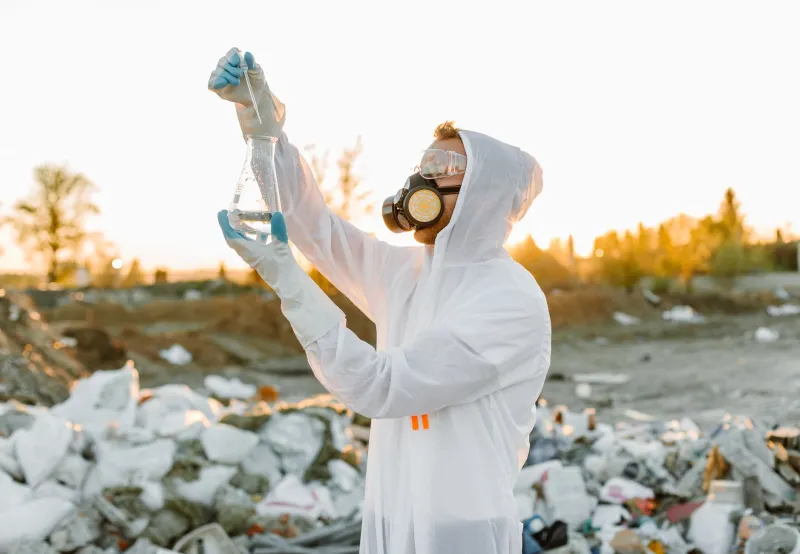
Dr. Cara Nolan has worked in environmental water quality testing for over a decade. On a Tuesday morning in early spring, she's already on her second coffee and her third set of water samples. Her lab — tucked into a nondescript building not far from the riverbank — looks more like a high school chemistry classroom than a cutting-edge research facility. But the work happening here is anything but ordinary.
"We're testing for everything," she says, holding up a small amber vial of river water. "Bacteria, heavy metals, nutrients, emerging contaminants like pharmaceuticals. The Hudson has a complicated history, and that means we have to stay on our toes."
The river's complicated history is an understatement. Decades of industrial dumping — most infamously, PCB contamination from General Electric's plants — left the Hudson in rough shape. The cleanup has been long, expensive, and contentious. But the water quality monitoring work that runs parallel to remediation efforts is what actually tells the story of whether progress is real.
Nolan's team collects samples at fixed stations along the river every week, year-round. Rain or shine. Frozen dock or not.
"Winter is honestly the hardest," she laughs. "But water quality doesn't take a holiday, so neither do we."
Community Scientists: The Eyes on the Shore
Not all of the monitoring happens in a lab. A lot of it happens in waders.
Riverkeeper, one of the most well-known environmental watchdog organizations on the Hudson, has long relied on a combination of staff scientists and community volunteers to extend its reach up and down the 315-mile waterway. Their Swim Guide program — which tests dozens of sites from the Battery in Manhattan all the way up to the Capital Region — is a direct lifeline for swimmers, paddlers, and anglers who want to know whether the water is safe before they get in.
Marco Delgado has been a community science volunteer with a Hudson Valley watershed group for three years. He's not a scientist by training — he works in HVAC installation during the week — but on weekends, he's out at his assigned monitoring site collecting water samples, logging data, and uploading results to a shared database.
"I grew up fishing this river with my dad," he says. "When I found out I could actually do something to help protect it, I didn't think twice."
Volunteers like Marco are the connective tissue of the monitoring network. They cover ground — and shoreline — that paid staff simply can't reach on their own. Their data feeds into larger databases tracked by state agencies and nonprofits, building a picture of the river's health that grows more detailed with every sample.
What They're Actually Measuring (And Why It Matters to You)
If you've never thought about what goes into a water quality test, here's the short version: a lot.
The key indicators that scientists and volunteers track include:
- Enterococcus and E. coli bacteria — the primary markers for fecal contamination, which typically spikes after heavy rainfall when stormwater overwhelms sewer systems
- Dissolved oxygen — fish need it to breathe; low levels can trigger fish kills
- pH and turbidity — basic measures of water chemistry and clarity
- Nutrients like nitrogen and phosphorus — often from agricultural runoff, these can fuel harmful algal blooms
- Specific contaminants — PCBs, heavy metals, and increasingly, microplastics and pharmaceutical compounds
For anglers, the bacteria counts matter for fish consumption advisories. For paddlers and swimmers, they're the difference between a safe outing and a trip to urgent care. For the broader ecosystem — the osprey, the striped bass, the blue crabs — all of it matters.
"People think clean water is binary," says Nolan. "Like, it's either safe or it's not. But it's really a spectrum, and it changes constantly based on rainfall, temperature, season, and what's happening upstream. That's why continuous monitoring is so important."
The Engineers You Never Think About
Beyond the water testers, there's another layer of the protection network that rarely gets attention: the engineers and municipal workers managing the infrastructure that keeps pollutants out of the river in the first place.
Combined sewer overflows — or CSOs — are one of the Hudson's persistent problems. When heavy rain hits, older sewer systems that carry both stormwater and sewage can overflow directly into the river. It's a decades-old infrastructure problem that cities up and down the Hudson Valley are still working to solve.
Municipal engineers in cities like Yonkers, Newburgh, and Albany have spent years designing and implementing green infrastructure projects — bioswales, permeable pavement, retention basins — specifically to reduce CSO events. It's unglamorous, expensive, technical work. But every time a major rainstorm rolls through without triggering a sewage overflow, it's a quiet victory for the river.
"Nobody throws a party when the sewer system works," one city engineer told us with a dry smile. "But that's kind of the point."
Nonprofits Holding the Line
Organizations like Riverkeeper, Scenic Hudson, and the Hudson River Estuary Program serve as both watchdogs and connectors — pushing for stronger regulations, publishing monitoring data, and making sure the public actually has access to the information being collected.
Their advocacy work runs alongside the science. When a monitoring site flags an unusual spike in contamination, it's often a nonprofit that follows up with regulatory agencies and makes sure the problem gets addressed. When a new development threatens a sensitive shoreline habitat, it's these groups that show up at the planning board meeting.
"The data only matters if someone acts on it," says a program director at one Hudson Valley watershed nonprofit. "Our job is to make sure that happens."
You're Part of This, Too
Here's the thing about the Hudson's water quality network: it's not a closed system. It's designed to include you.
Most of the major monitoring programs along the river actively recruit volunteers. You don't need a science degree. You need a little training, a willingness to show up regularly, and ideally, some decent rain gear.
And if volunteering isn't your thing, using the data is still a form of participation. Checking Swim Guide before you head to the water. Reporting a visible pollution event to Riverkeeper's pollution hotline. Sharing water quality information with other anglers in your community.
The Hudson doesn't belong to the scientists or the nonprofits or the engineers. It belongs to everyone who fishes it, paddles it, swims in it, and lives beside it. The people watching over every drop are doing it for you — the least we can do is pay attention.
Want to get involved? Check out Riverkeeper's community science programs or visit your local watershed organization to find volunteer monitoring opportunities near you.