Banks, Bikes, and Bait Shops: The Hudson River Towns Rewriting What 'Waterfront Living' Actually Means
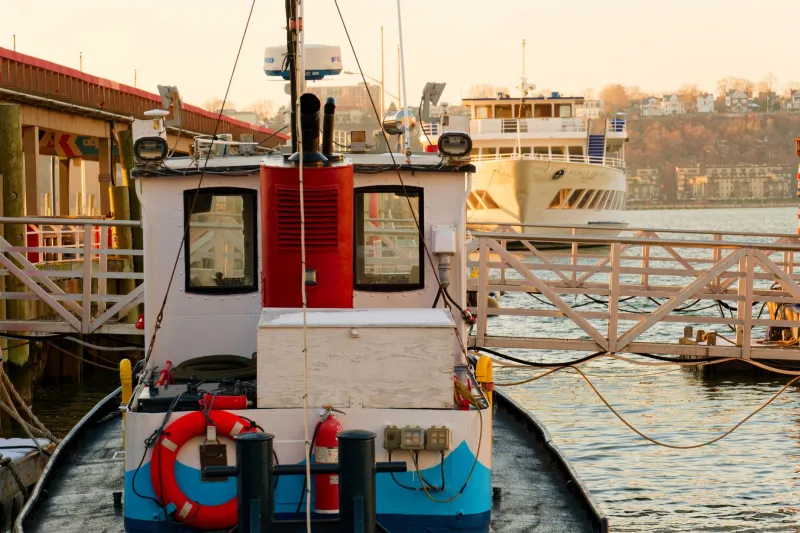
For most of the 20th century, getting to the Hudson River in many of its riverside towns meant hopping a fence, squeezing past a rusting chain-link gate, or just knowing the one guy who had a key to the old plant lot. The waterfront wasn't a destination. It was a punchline — or worse, an afterthought.
That story has changed dramatically over the past decade or so, and it's changed fast. Across a stretch of river running from the Bronx all the way up through the Catskill foothills, neighborhoods that spent generations with their backs to the water are now facing it head-on. New boat launches, riverside trail systems, community fishing piers, and converted industrial spaces are drawing people to the Hudson who never would've thought to come before.
Some of that is genuinely exciting. Some of it is complicated. Most of it is both at the same time.
The Infrastructure That Started It All
You can't really talk about Hudson River waterfront transformation without talking about money — specifically, the federal, state, and municipal dollars that started flowing into these communities in the late 1990s and picked up serious steam after the EPA's Hudson River PCB cleanup efforts forced a broader public conversation about what the river could be.
In Yonkers, the development of the Yonkers Waterfront — anchored by what's now a mixed-use stretch along the Metro-North corridor — helped establish a model for how a working-class city could reclaim its riverbank without completely surrendering it to luxury high-rises. Kayak rentals appeared. A fishing pier materialized. Families started showing up on weekends with coolers and folding chairs.
Further north, cities like Newburgh and Kingston pursued similar playbooks, leveraging state Consolidated Funding Application grants and Hudson River Estuary Program dollars to build out public access points. Kingston's Rondout waterfront, once a ghost town of collapsed warehouses, now hosts a maritime museum, a functioning commercial fishing dock, and enough foot traffic on summer weekends to make parking a genuine headache.
None of this happened by accident. Behind every new boat ramp and riverside trail is usually a coalition of local advocates, city planners, environmental nonprofits, and — crucially — longtime residents who pushed for access before it was fashionable to care.
The Businesses That Followed
Where public infrastructure led, small businesses followed. And the mix of enterprises that have taken root along the Hudson's newly accessible waterfronts tells you a lot about who these communities are becoming.
In Beacon, which has arguably gone further and faster than almost any other Hudson Valley town in terms of waterfront reinvention, you'll find a bait and tackle shop operating two blocks from an art gallery that sells prints of the river for four figures. That's not a contradiction — it's actually a pretty accurate portrait of who's showing up to fish off the Beacon docks on a Saturday morning. Retirees. Young families. Weekend visitors from the city. Lifelong locals who remember when Beacon was a very different place.
The businesses that seem to thrive in these evolving corridors are the ones that figured out how to speak to all of those people at once. Outdoor outfitters that offer guided fishing trips and beginner kayak rentals. Diners that serve a $7 egg sandwich at 6 a.m. for the early-rising anglers and a $22 brunch plate at noon for the visitors rolling in from Brooklyn. It's a careful balance, and not everyone pulls it off.
The Part Nobody Wants to Talk About
Here's where things get honest: waterfront revitalization and rising rents tend to travel together. That's not a Hudson Valley-specific problem — it's a national pattern — but it plays out in particularly visible ways along the river.
In several communities, the same investments that created beloved public fishing piers and kayak launches also contributed to rising property values that pushed out the working-class households who had lived within walking distance of those very waterfronts for generations. The new trail is beautiful. The family that used to live at the end of it can no longer afford to.
Local advocates and city planners are increasingly trying to get ahead of this tension rather than pretend it doesn't exist. In Newburgh, community land trust models have been proposed as a way to keep housing affordable even as investment flows in. In Hudson, longtime residents have been vocal — sometimes loudly so — about ensuring that waterfront development plans include workforce housing components and that local businesses aren't priced out of the ground-floor storefronts that make a waterfront district actually feel like a community rather than a theme park.
The Hudson River Estuary Program and groups like Scenic Hudson have also pushed for what they call 'equitable access' frameworks — essentially, making sure that the public amenities built with public dollars are genuinely usable by the public, including people who don't own a $1,200 kayak and can't take a Tuesday off to paddle.
What Authentic River Culture Actually Looks Like
Spend enough time on the Hudson's working waterfronts and you start to get a feel for what river culture actually is, as opposed to what it looks like in a tourism brochure.
It's the guy who's been fishing the same spot under the Poughkeepsie railroad bridge for 30 years, who knows exactly when the stripers move through and has zero interest in telling you. It's the community fishing clinics run by local environmental groups that draw kids from public housing projects who catch their first bass and can't stop talking about it. It's the old-timer at the bait counter who'll spend 20 minutes explaining the difference between bloodworms and nightcrawlers to a total stranger without being asked.
That culture doesn't disappear when a neighborhood gets nicer. But it does get diluted if nobody's paying attention. The towns that seem to be threading this needle most successfully are the ones where local river traditions — fishing derbies, boat parades, community cleanups — are being actively preserved and promoted, not just tolerated alongside the new amenities.
Hudson River fishing clubs, many of which have operated for decades in communities up and down the valley, have become unexpected anchors of continuity in this shifting landscape. They're the institutional memory of the waterfront, and in a lot of cases, they're the reason new residents get hooked on the river at all.
The River Doesn't Care What You Paid for Your Apartment
Maybe that's the thing worth holding onto as all of this continues to evolve. The Hudson itself is indifferent to neighborhood demographics. The striped bass don't check property values before they run. The egrets nesting in the shallows aren't impressed by the new mixed-use development going up on the old rail yard.
The river just keeps doing what it does — moving, changing, offering itself up to whoever shows up on its banks. The work is making sure that invitation stays genuinely open, that 'waterfront destination' doesn't quietly become code for 'waterfront for some people.'
The communities getting that balance right are worth celebrating. The ones still figuring it out deserve patience and honest conversation. And the river, as always, is worth fighting for — whoever you are and wherever you're coming from.