Grease, Gear, and Good Company: The Scrappy Hudson Marinas That Became the River's Best Hangouts
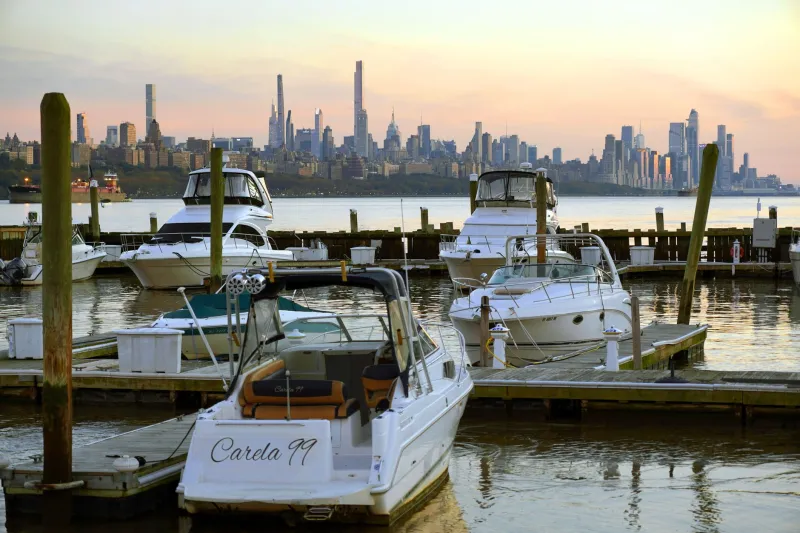
There's a picnic table at a small marina just north of Newburgh that has hosted more honest conversations about the Hudson River than any conference room, waterfront development meeting, or environmental symposium ever could. It's weathered, paint-peeling, and surrounded by the smell of two-stroke engine oil and low tide. On any given Saturday afternoon, you'll find a retired commercial fisherman, a weekend kayaker, a kid learning to tie a bowline knot, and somebody's grandmother eating a sandwich and watching the current move. Nobody planned this. It just happened.
That's the thing about the Hudson's independent marinas. Nobody designed them to be cool. And that's exactly why they are.
What Makes a Marina More Than a Parking Lot for Boats
The word "marina" conjures a certain image — slips full of gleaming fiberglass, a restaurant with a nautical theme, maybe a tiki bar playing Jimmy Buffett covers. And sure, those places exist along the Hudson. Some of them are perfectly fine. But the marinas that locals actually love tend to look a lot less like that.
Think chain-link fences draped with fenders. Bulletin boards covered in hand-written notices for used outboard motors and lost-and-found life jackets. A bait cooler that's been running since the Clinton administration — the first one. A dock master who knows every regular by name, their boat's quirks, and the story behind the dent on the starboard bow.
These are working waterfronts in the truest sense. They exist to get boats in and out of the water, to fix what breaks, and to keep people connected to the river in a practical, no-frills way. But somewhere along the line, the practical became personal, and the personal became community.
"People don't just come here to store their boats," says one marina owner operating out of a mid-river town in the Hudson Valley who's been running her family's operation for nearly two decades. "They come because this is their people. You can't manufacture that. You either have it or you don't."
The Regulars Who Keep the Lights On
Every marina worth its salt has a cast of regulars that would make a screenwriter jealous. There's always someone who shows up before sunrise, someone who never seems to leave, and someone whose boat has been "almost ready to launch" for three consecutive seasons.
But beyond the characters, what these marinas have built is something more durable: a shared identity around the river. Anglers swap intel on where the stripers are running. Boaters who've been coming since they were teenagers now bring their own kids to learn the ropes. Newcomers — many of them urban transplants who discovered the Hudson Valley during the pandemic and never fully left — show up a little wide-eyed and leave with a standing invitation to next week's informal dock cookout.
"We get a lot of people now who grew up without any connection to the water," says a dock hand at a marina tucked behind a rail yard in one of the river's smaller port towns. "They're hungry for it. You can tell. They want to learn everything. And the old-timers — they love teaching. They've been waiting for someone to ask."
That exchange — between the river-born and the river-curious — is one of the more quietly remarkable things happening at these spots right now.
Why Authenticity Is the New Amenity
We live in an era of manufactured experience. Every waterfront development project seems to promise the same package: boutique hotels, artisan food halls, curated green space, and a sunset view that's technically accessible to everyone but somehow always feels like it was designed for someone else. It's not that these places are bad. It's that they're interchangeable.
The independent marina offers something different, and increasingly, people are driving past the polished stuff to find it.
There's no velvet rope at the bait counter. Nobody's going to judge your boat, your gear, or your catch. The coffee is terrible and served in a Styrofoam cup and somehow tastes exactly right at six in the morning with the fog still sitting on the water. The conversation is real because the stakes are low and the setting is honest.
"You want to know what the Hudson actually is?" asks a longtime recreational boater who splits his time between a marina in Greene County and one further south near Kingston. "Come sit on that dock for a few hours. Don't look at your phone. Just watch what comes and goes. You'll learn more about this river than any documentary will teach you."
The Challenges Keeping These Places Alive
For all their charm and cultural value, independent marinas are under real pressure. Property taxes along the Hudson have climbed steadily as waterfront land becomes more desirable. Aging infrastructure — docks, lifts, fuel systems — demands expensive upkeep. Permitting and environmental compliance, while necessary and important, can strain small operators who don't have legal teams or deep pockets.
Some have already been sold, converted, or simply shuttered. Each one that closes takes with it a piece of the river's working identity that can't be easily replaced by another condo project with a boat-themed mural in the lobby.
A handful of Hudson Valley municipalities have started to recognize what they stand to lose. A few towns have explored zoning protections for working waterfront uses, and some conservation groups have flagged independent marinas as culturally significant infrastructure — the kind of place that holds a community together in ways that are hard to quantify on a spreadsheet but immediately obvious the moment you walk through the gate.
"Once it's gone, it's gone," says the marina owner from earlier in this story, gesturing toward the slips, the boatyard, the picnic table. "You can't recreate this. You can try to fake it, but everyone will know."
Finding Your Marina
If you haven't wandered into one of these spots yet, consider this your invitation. You don't need a boat. You don't need gear. You just need to show up with some curiosity and the willingness to slow down for an afternoon.
Ask the dock master what's biting. Ask the old guy in the lawn chair how long he's been coming here. Watch someone back a trailer down a ramp and appreciate the skill involved. Drink the bad coffee. Sit at the picnic table.
The Hudson River has a lot of entry points — hiking trails, launch ramps, public parks, guided tours. But some of the best introductions to what this river actually means to the people who love it happen at these grease-stained, sun-bleached, wonderfully imperfect little marinas that have been here all along, just waiting for you to notice them.
Your river life starts here. Probably with a Styrofoam cup in hand.